

Design for Good Forges Global Non-profit Alliance to Deliver Direct and Urgent Impact for UN Sustainable Development Goals
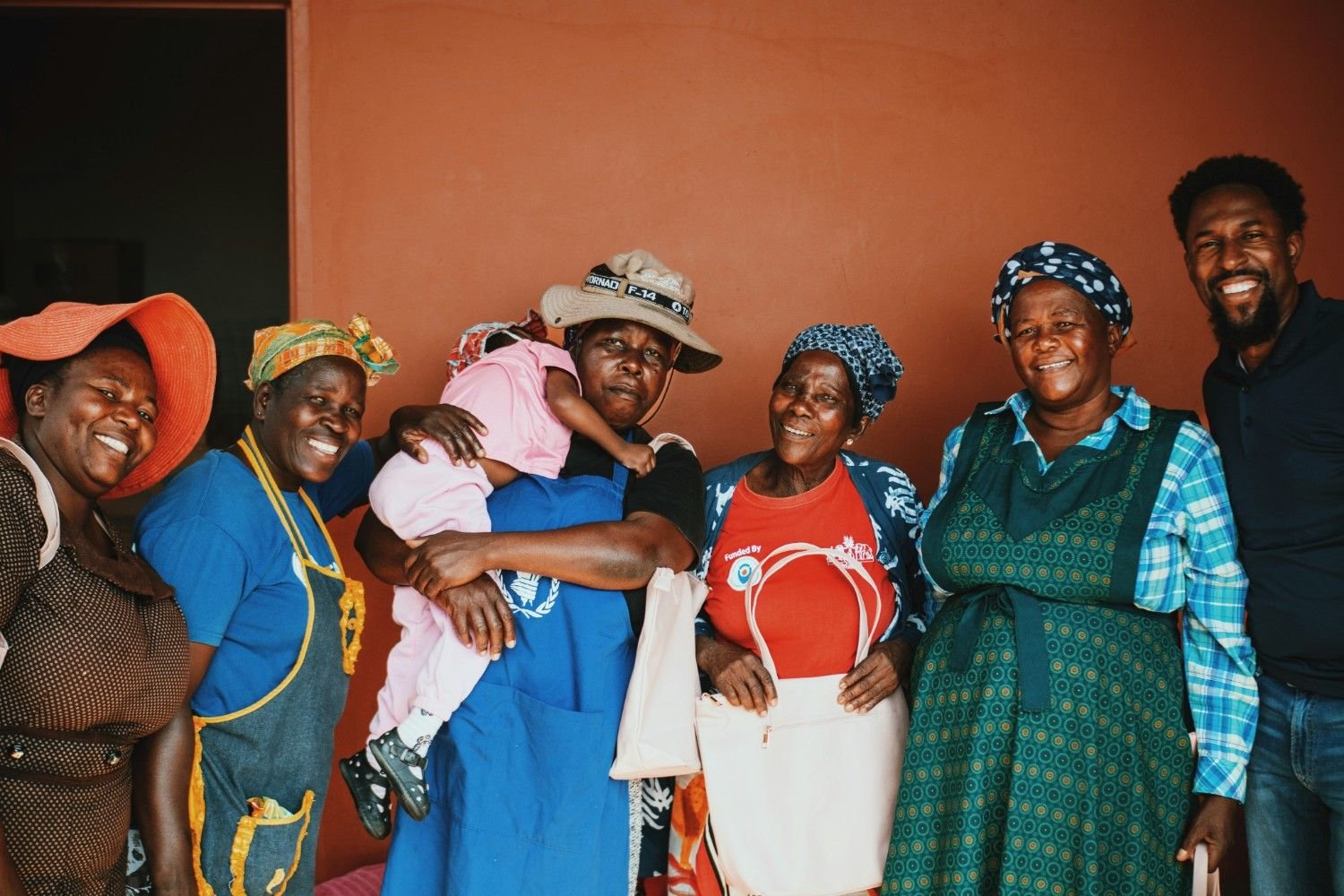
Image via Michael Ali on Unsplash
London (21 April 2022) – Today, Design for Good launched as a global non-profit alliance of industry-leading companies and institutions across private sector, academia and social sectors, with the ambition of enacting measurable positive impact addressing the United Nations Sustainable Development Goals (UN SDGs), on a scale only possible through global collaboration. The founding alliance comprises General Mills, Logitech, McKinsey & Company, Microsoft led by Xbox, Nedbank, Nestlé, PepsiCo, Philips and the Royal College of Art, with the aspiration of many more of the world’s leading organisations to join soon.
The design leaders at each of the founding companies will make up an advisory council that unleashes and supports the 5,000-strong design community across all nine organisations to voluntarily participate in an unprecedented nine-month initiative to design and develop open-source products and services to address some of society’s biggest challenges.
Each year, Design for Good will focus on one UN SDG. In this, its inaugural year, Design for Good will seek to address Goal 6, focused on clean water and sanitation. Billions of people worldwide live without safely managed drinking water, sanitation and hygiene services, which are critical for protecting human health. Gilbert F. Houngbo, Chair of UN-Water and President of the International Fund for Agricultural Development (IFAD), is a trustee of Design for Good and will help cultivate the support of local NGOs in communities most affected to provide insights into real-world needs and constraints, and to ensure designers’ products and services are sustainable.
Design may address issues such as access to adequate and equitable sanitation and hygiene, the promotion of desalination, wastewater treatment, recycling and reuse technologies, or the implementation of integrated water resources management.
Framework of Design for Good
Founding partners commit investment of upfront funding and bring volunteers from within their organisations’ design community. Volunteer designers, with the support of their organisation, individually sign up to contribute five days of their time towards ideating, researching and prototyping a product or service that responds to the designated UN SDG. Designers will collaborate across regions, organisations and disciplines, with support from local NGOs to provide insight into real user needs and constraints from the outset. Product and service designs are to be submitted after six months and assessed against the UN targets and indicators, as well as made available on an open-source, licence-free basis.
Over time, the aspiration is to create innovative new products and services that transform the lives of millions of people and communities around the world. The intention is not only to create direct and measurable change, but to transform the way large companies and institutions collaborate on a common goal. The initial results of Design for Good, with the first ideas announced for implementation, will be published later in 2022.
