


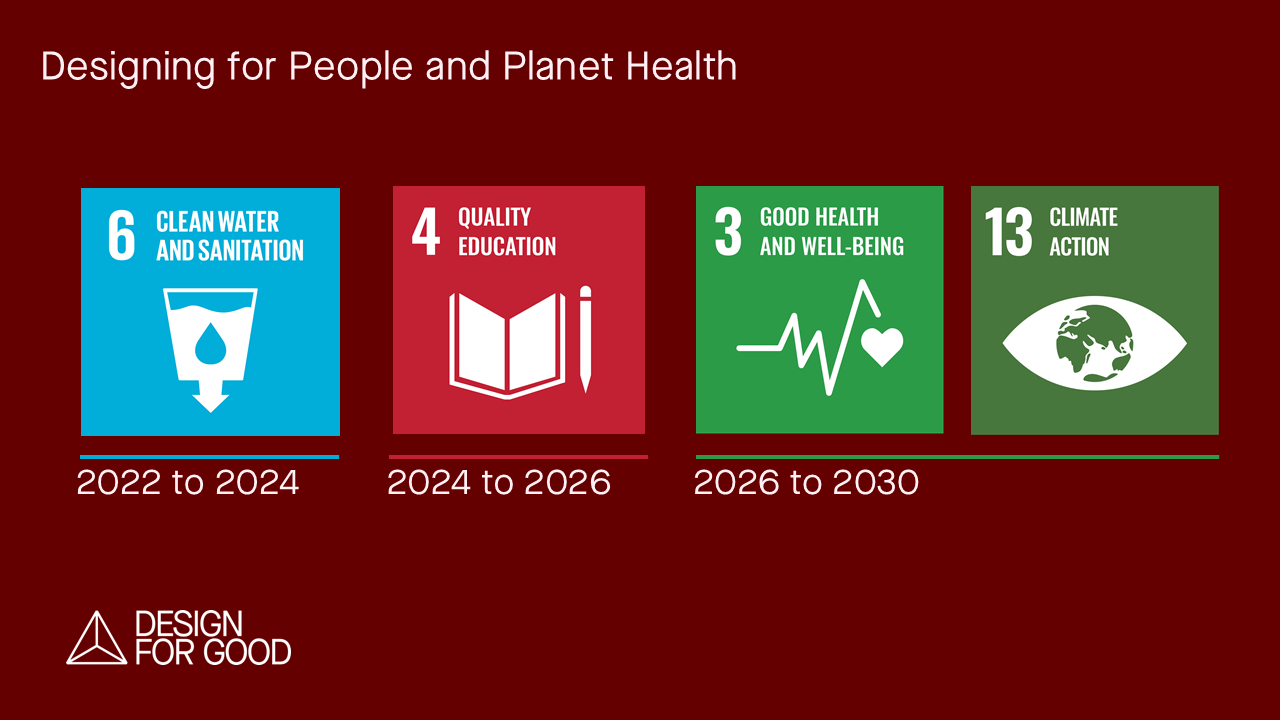
London (20 October 2026) – On the heels of a United Nations (UN) report that global temperature rise is set to cross 1.5°C within the next few years and cause severe damage to human health and ecosystems, global charity Design for Good today kicks off its most ambitious venture yet by Designing for People and Planet Health. Over the next four years, hundreds of creatives from the organisation’s corporate Alliance and individual members, will collaborate with NGOs, non-profits and charities around the world to work as teams on solutions addressing UN Sustainable Development Goals (SDGs) 3: Good Health and Well-being and 13: Climate Action.
This marks the third cycle addressing SDGs, building on the success of projects related to SDG 4: Quality Education and SDG 6: Clean Water and Sanitation. These designs have already seen 53,200 people in Kenya provided with affordable clean drinking water, with an estimated to reach 1.5 million people by the end of 2030; 181,000 people in the UK and Ireland who have changed water-use behaviours; and an estimated 50,800 schoolchildren in Mexico who will learn literacy, numeracy and environmental awareness by the end of 2030.
Starting today, new teams will research, innovate, iterate and create a product or service based on 18 design challenges set by NGOs, non-profits and charities, who will work alongside teams every step of the way. Partner organisations include UNESCO, the International Federation of Red Cross and Red Crescent Societies (IFRC), Sustainable Energy for All (SEforALL), Health Care Without Harm Europe, Climate Central, Malaria Consortium and Conservation International.
“We are at a moment when human and planetary health can no longer be treated separately,” said Design for Good Managing Director Cecilia Brenner. “Design has a unique role to play in connecting these challenges with practical action on the ground. By bringing designers, NGOs and non-profits, and communities together across borders, we can use our collective creativity to create a healthier future for people and the planet.”
To date, Design for Good has convened more than 2,500 creatives and 47 NGO, charity and non-profit organisations to develop products and services grounded in real needs to make lasting, measurable impact. All designs are available open-source and free for any other organisation to use and scale.
“Design is often associated with products and services, but its greatest potential lies in creating positive change,” said Terry Behan, Executive Head of Design at Nedbank, a Design for Good Alliance member. “Through our involvement in Design for Good, we've seen first-hand how life-centred design can help address real societal and environmental challenges. Cycle 3 represents an important opportunity to apply creativity, innovation and empathy in service of healthier communities and a healthier planet.”
See our latest impact numbers and projects in our 2026 Impact Report.
