

Designing an Engaging Way to Build Media Literacy in Schoolchildren
An interactive game that cultivates awareness of online misinformation and offline consequences.
SDG 4: Quality Education
Estimated number of young adults in Scotland educated to identify misinformation online by end of 2028:
Help us make a difference

All our projects are open-source. Go ahead and use them to do good.
The Challenge
The rapid online spread of false or inaccurate information, and the inability of most people to discern the truth, have potentially dangerous consequences for individuals and societies.
Misinformation spreads six times faster than the truth and is believed 75% of the time. With 500 hours of content uploaded to YouTube, 5,000 videos viewed on TikTok, and 695,000 stories shared on Instagram every minute, misinformation is rampant. Despite feeling confident in identifying misinformation, only 4% of people can do so consistently. Glasgow-based Project Real, in their efforts to educate about misinformation, needed an appealing online experience to engage and empower more young people in distinguishing real from fake information and making sound choices.
The Innovation
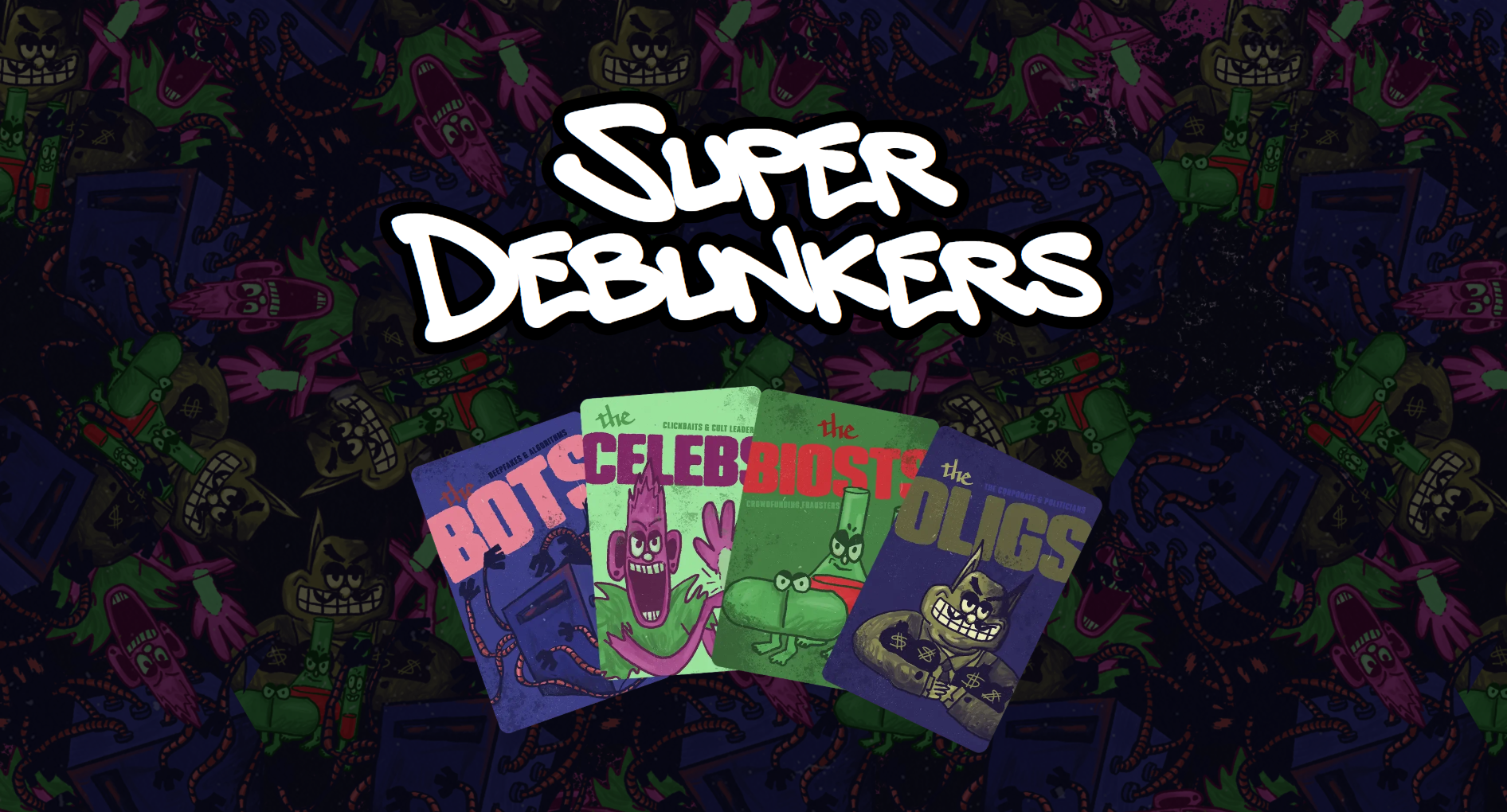
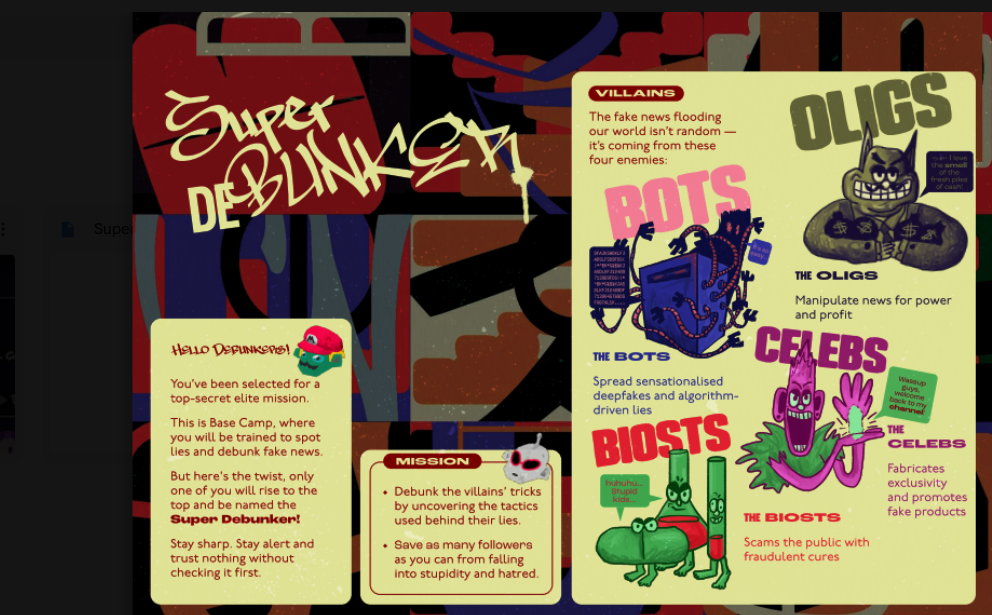
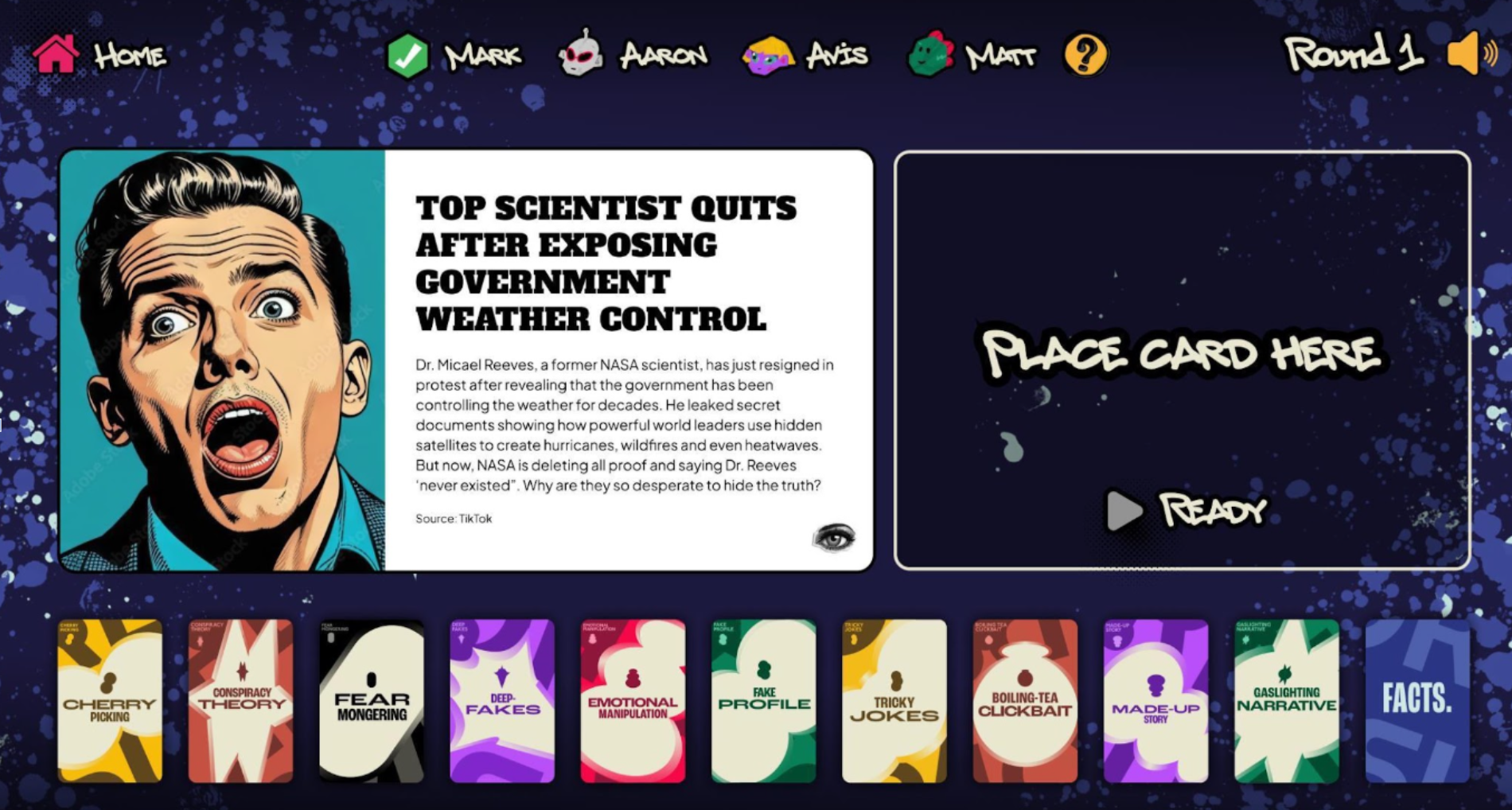
The Design for Good team created Super Debunkers, an online and physical card game with story-driven gameplay where young people debunk misinformation and defeat villains by identifying which manipulation tactic is being used to spread fake news – making media literacy active, fun and memorable.
Scalability
In addition to the online platform, there is an offline physical version for classrooms to teach media literacy. The game is designed for children ages 11-14 in Scotland, but it has the potential to be used in other parts of the world and scaled for adult learning.
Story-driven gameplay
Through an online game, young people debunk misinformation and defeat villains by identifying which manipulation tactic is being used to spread fake news. As players move through the game, they are educated on why the content is deemed fake – making media literacy active, fun and memorable.
Building skills for real-world use
By playing the game, young people can develop skills to identify and challenge misinformation, foster empathy around its real-world harms and learn critical thinking and media literacy skills, which help in understanding that online actions can have offline consequences.
The Results
This project is still in development – check back later for future updates!
Help us make a difference
All our projects are open-source. Go ahead and use them to do good.