

Design for Good recognises projects whose estimated impact includes saving dozens of lives through toilet access, educating thousands on menstrual health and influencing thousands on good water habits
Photographer: Irina Zakharova
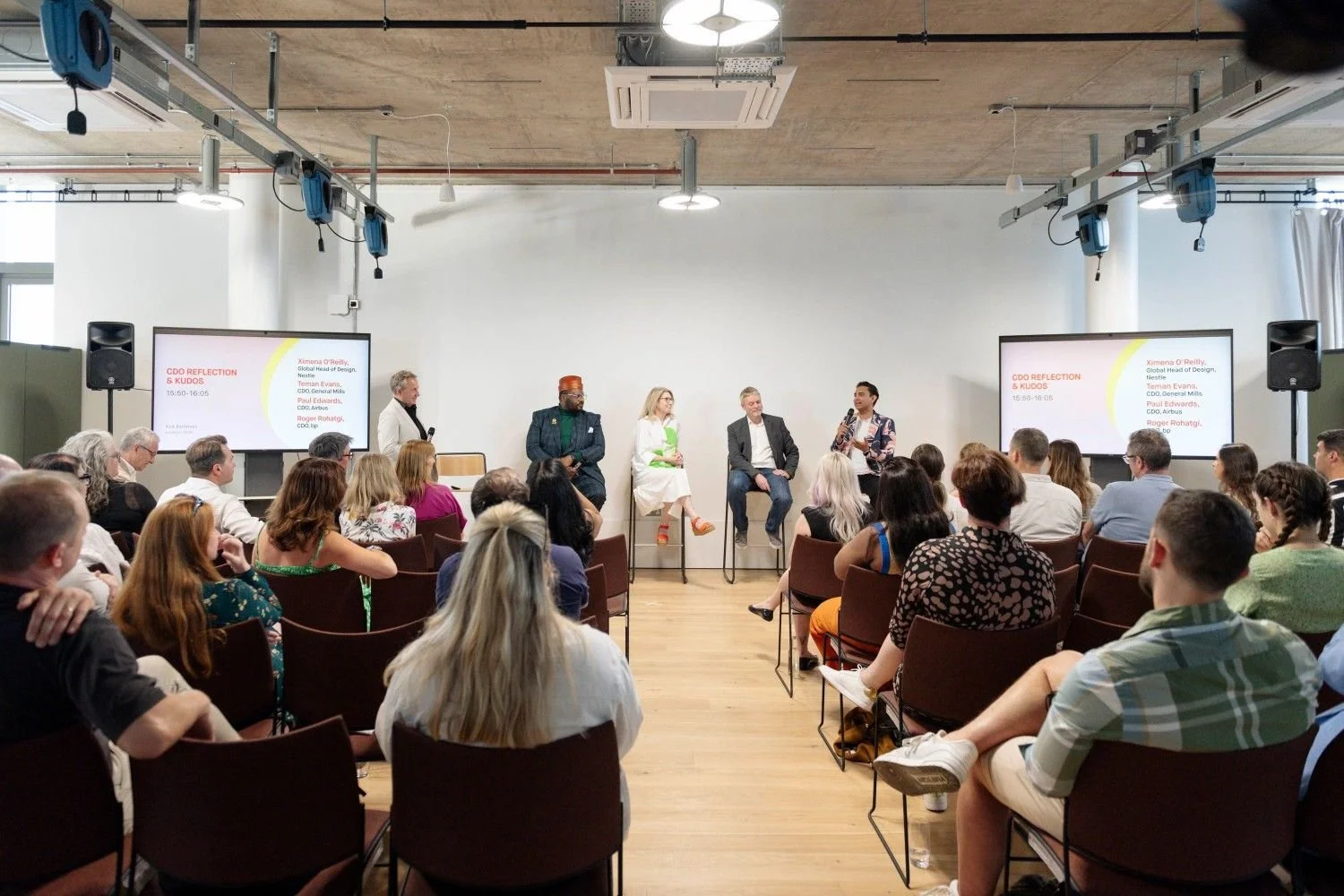
London, 25 June 2024 — At the Royal College of Art (RCA) in London, the Design for Good alliance gathered, including representatives from 14 global companies, 12 development organisations and academia to celebrate the close of Cycle One. In this inaugural two-year cycle, designers from the alliance partnered with development organisations to address United Nations Sustainable Development Goal 6: Clean Water & Sanitation. These voluntary efforts resulted in 26 promising concepts, 13 of which have been implemented or are currently in the process of implementation.
Established in 2022, Design for Good is a global non-profit alliance with the aim of directly harnessing the collective power of design to create positive impact for the United Nations' sustainable development goals. Members to date include Airbus Commercial, bp, General Mills, LIXIL, Lloyds Banking Group, Logitech, McKinsey & Company, Microsoft led by Xbox, Nedbank, Nestlé, PepsiCo, Philips, the Royal College of Art and, as announced at the event, the recent addition of DBS Bank.
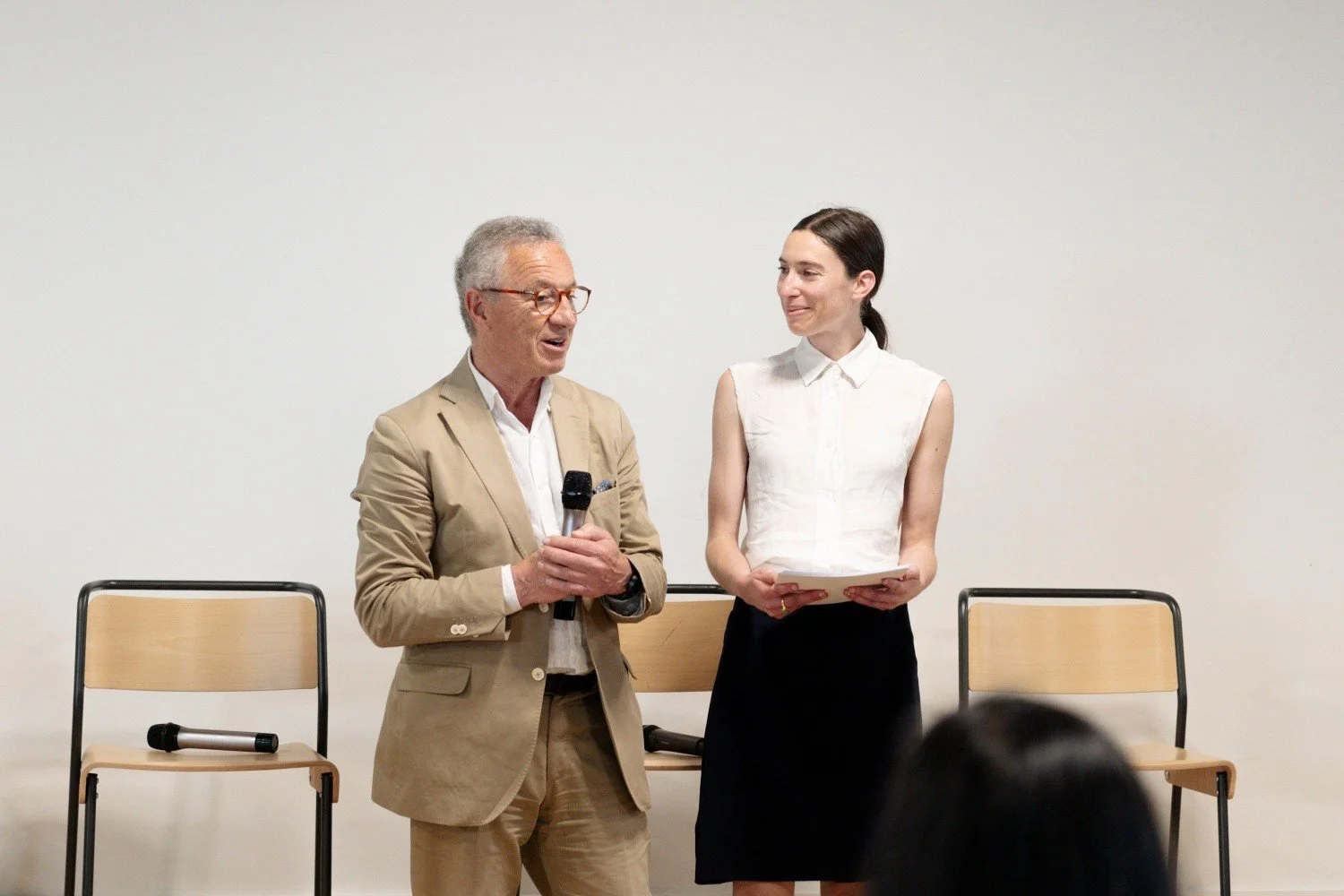
Chair of Design for Good, Ben Sheppard, started the event by reflecting that: “Over the past two years Design for Good orchestrated over 600 designers from 22 countries to work together with development organisation partners. For these two years we focussed on the United Nations Goal 6. Today, we recognise projects whose impact ranges from dozens of lives estimated to be saved through toilet access, to thousands to be educated on menstrual and hygiene health, to hundreds of thousands already influenced through changed water consumption behaviour.”
Several solutions were selected for particular recognition, including:
Redesign of portable toilet service at home
Some 2.3 billion people worldwide don’t have access to safe and clean toilets. For the millions of Ghanians without in-home toilets, there were few alternative options until Clean Team Portable Toilets Ghana presented a comprehensive service that delivers and maintains toilets in the homes of their subscribers. Working in partnership with Clean Team Portable Toilets Ghana, the Design for Good team found ways to redesign the service: improving customer experience, supporting staff training and creating new digital tools, all of which allowed for a lower subscription fee. The project has enabled 3300 people to gain access to a portable toilet in their home, and is estimated to have saved up to 35 lives, predominantly children, while reducing the risk of contracting disease in the communities served.
Abigail Aruna from Clean Team Toilet comments: "The DFG team easily understood our challenge even though they are miles away from us and apart. They presented us with solutions that got us to think outside the box and most of all presented us with tools that would help us work smarter.”
Educating children on safe and hygienic handwashing.
The United Nations estimates proper hand-washing hygiene can reduce child mortality by more than 50%. The WASH Foundation focuses on the importance of early education in order to establish habits early in life, and together with Design for Good’s Project Bu developed a biodegradable, universally understandable flipbook that communicates hand-washing in a fun, engaging way for children aged 5-7 years old. The solution has the potential to impact 120,000 children in Africa by the end of 2026, with future plans to roll out to further continents afterwards.
Steffani Fields from The WASH Foundation comments: “So many children growing up in developing countries still lack the understanding and resources to protect themselves against deadly germ transmission because the close connection between good hygiene practices and good health is not taught in schools or at home. The inclusion of WASH Education into school curriculums can bridge that gap and Project BU is going to be an extremely important tool to ensure that it happens effectively."
Water saving campaign aimed at driving behaviour change.
Water Saving Week is a social media campaign that aims to encourage behavioural change by increasing awareness of the impact of water usage. Design for Good partnered with the UK NGO WaterWise to design an engaging, illustrative, character-led campaign that reached 3.5 million impressions, with 180,000 people estimated to have changed water consumption behaviours as a result. Acknowledging the expanded potential reach for the developed material, the Design for Good team has also partnered with ECO UNESCO and recently delivered a water saving campaign with Green-Schools Ireland, reaching primary and secondary schools across the country.
Educating schoolgirls to learn about menstrual health.
The Design for Good team partnered with Foot Forward Fund to help transform menstrual education for young girls in Tanzania and Kenya, creating an engaging, informative and empowering menstrual health and hygiene educational experience. They did this by redesigning the material and education delivered to the girls, using a central ‘sister’ story with relatable hero characters. The story-based education was supported by leave-behind Care Cards, a set of ‘true or false’ statements to reinforce the learning from the sessions in a gamified format. The solution has the potential to reach 13,000 schoolgirls in East Africa by the end of 2026.
Team member Lynn Heesterbeek, a designer from Philips commented: “It has been great to team up with such a diverse group of skills, collaborate across time zones, learn from each other over the two year cycle and create impact in ways that would never have been possible without Design for Good.”
Laura Chauvin from Foot Forward Fund comments: “Our partnership with Design for Good is revolutionising the ways to affordably, yet dramatically, enhance our current approach to and tools for engagement with those we serve.”
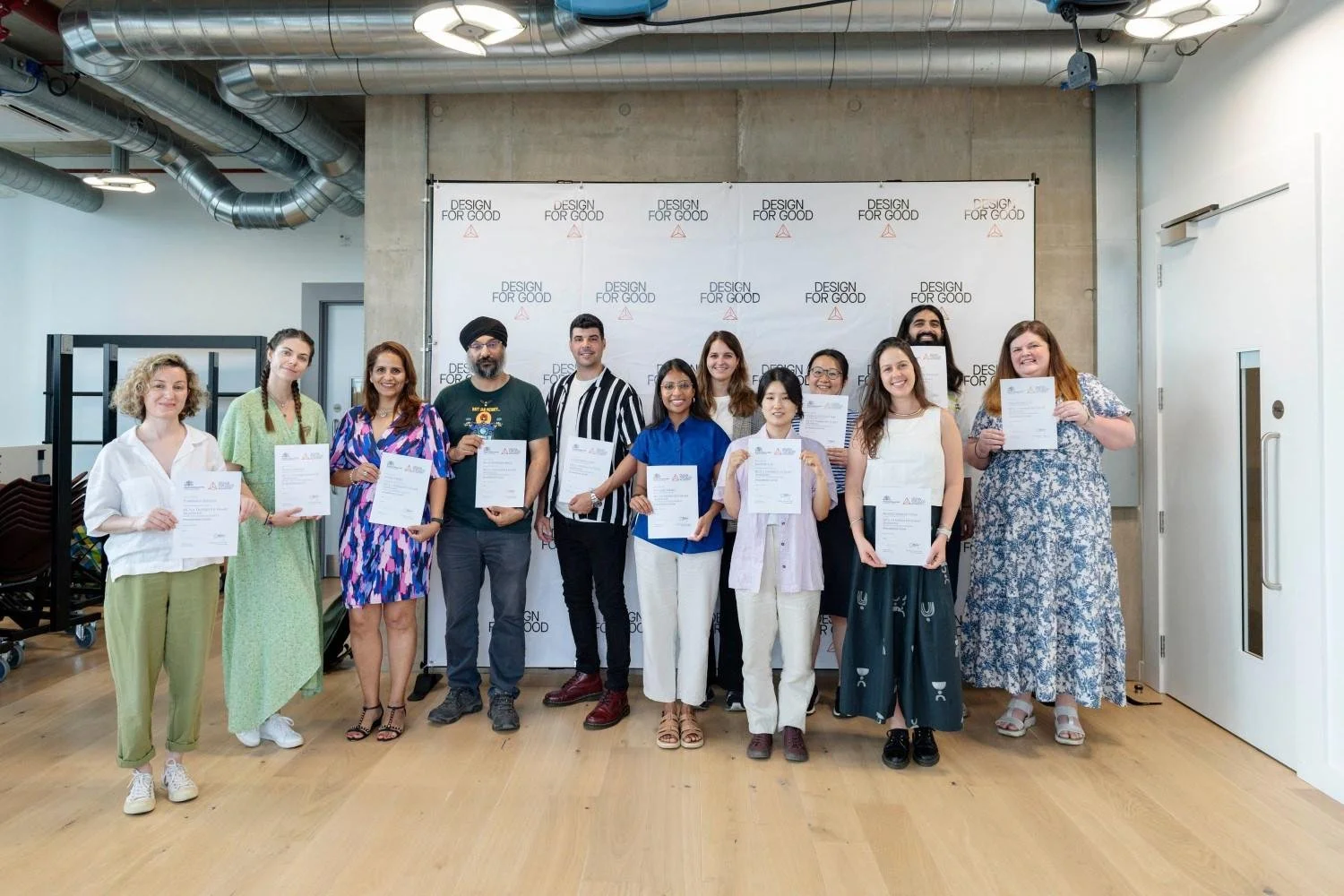
The event in London was also an opportunity to celebrate the RCA x DfG Academy. Run by the Royal College of Art, it aims to provide design-led education on how to maximize social impact and includes lectures from global luminaries such as Don Norman. Over the past months, 275 designers from the DfG alliance enrolled in the academy, of which 144 received formal accreditation and certificates from the RCA. The course has a 94% recommendation rating and has resulted in designers taking new humanity and life-centered design skills back into their respective global companies, with 104 designers already confirming that they have incorporated learnings into their organisations.
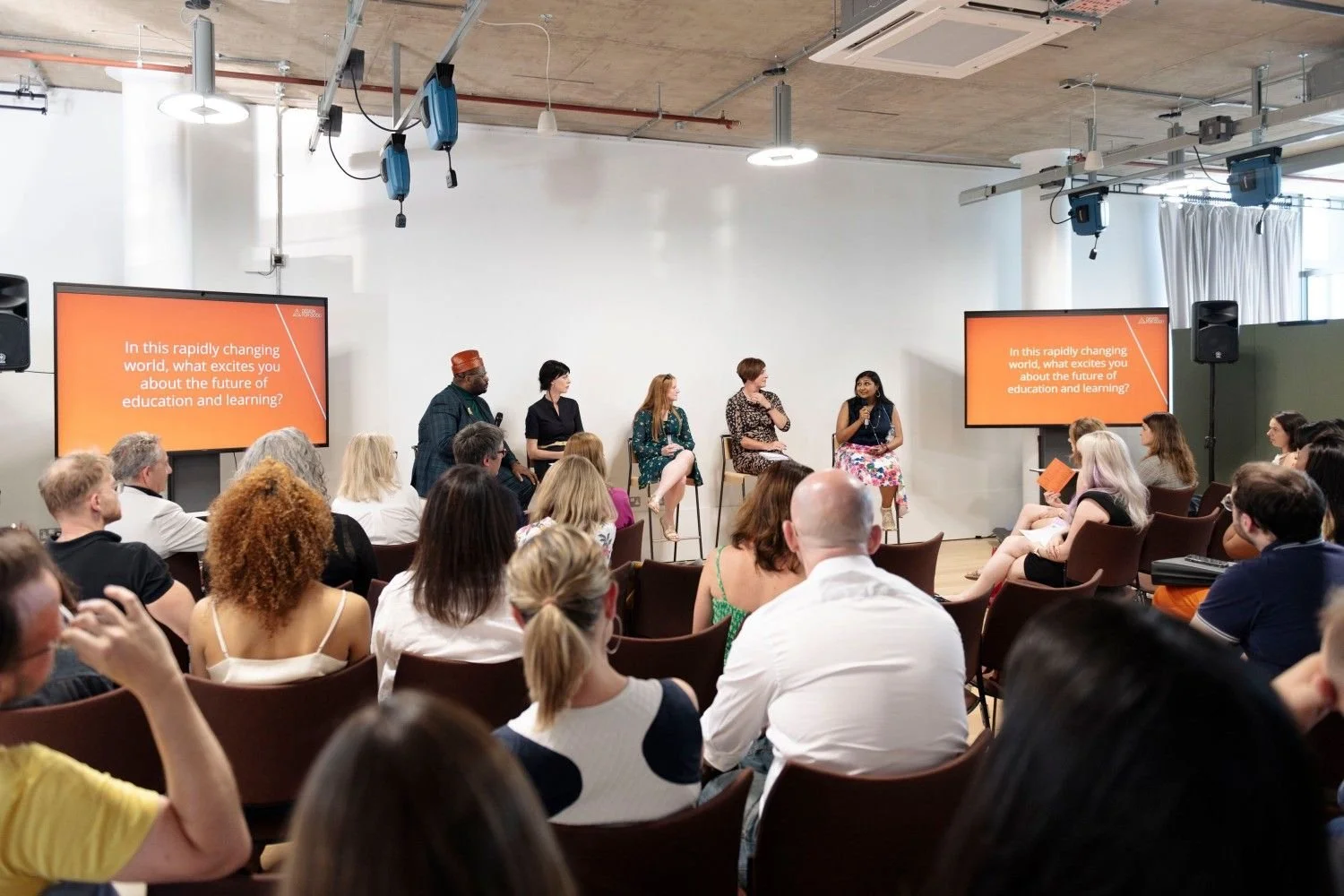
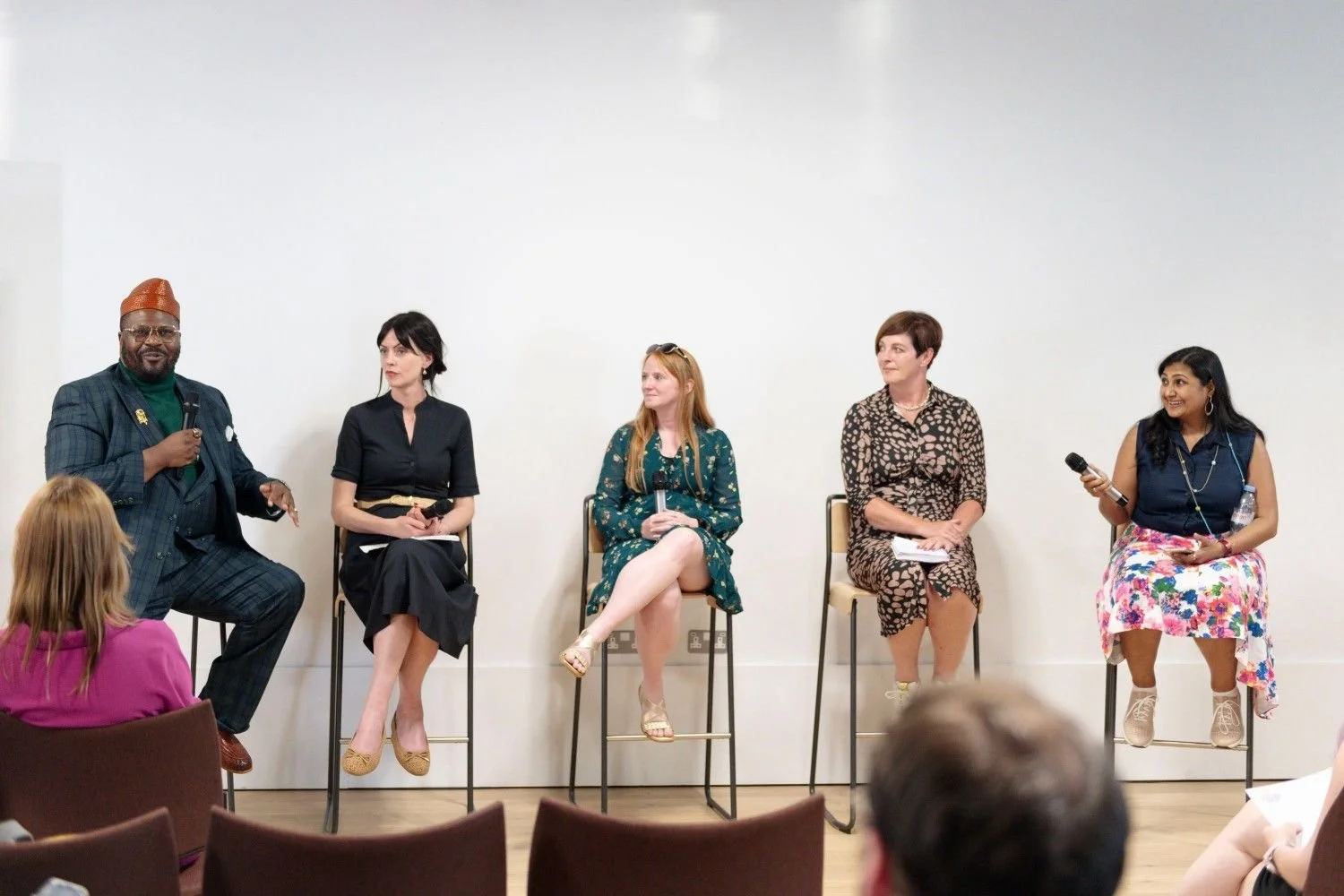
The event concluded with an introduction to Cycle Two, due to commence in September 2024, by Design for Good Board Trustee and International Design Consultant, Sandy Speicher. She introduced the alliance to Goal 4: Quality Education, highlighting the myriad positive societal benefits of education and providing a rallying cry for action as the world is falling behind in achieving quality education by 2030 without additional measures.
Looking forward to Cycle Two, Teman Evans, Chief Design Officer of General Mills observed: “Partnering with Design for Good continues to pay dividends to our company and designers, infusing the spirit of collaboration, the mindset of problem solving and generating even more strategic thinkers to create a virtuous cycle of opportunity. I’m very excited for Cycle Two, partly as an educator myself as I believe in the learning mindset, in lifelong learning and that education should be freely available to all. Cycle Two will create a massive learning ripple effect. Imagine how many millions of lives we can positively impact!”
Evans also invited potential development organisation partners Right to Play, Project Real, Homeward Bound and Children in Crossfire to present challenges they face in their respective areas and their hopes for how Design for Good designers might address these problems.
Concluding the event, Cecilia Brenner, Design for Good’s Managing Director, remarked: “Looking forward, we have huge ambitions to harness the power of design while also equipping our designers with the evolving skills to design for good, for all of life. We already see proof of our designers taking these design skills back into their organisations making waves of positive change. Our designer-development partner collaborations continue to leverage our joint capabilities for ever greater impact on individuals, communities & the environment.”
